Generative engine optimisation for local businesses: the 8 pillars that earn AI citations.
Generative Engine Optimisation (GEO) is the practice of optimising content, entity signals, and authority so AI engines, ChatGPT, Perplexity, Claude, Google AI Mode, cite your business when answering buyer queries. It overlaps with classic SEO but the signal mix is different. This guide breaks down the eight pillars that actually move citations for local service businesses, with a 30-day implementation roadmap. (For Ireland-specific AI Mode dynamics, see our Google AI Mode in Ireland deep-dive; for the full agency engagement, see AI SEO Ireland.)

What is Generative Engine Optimisation?
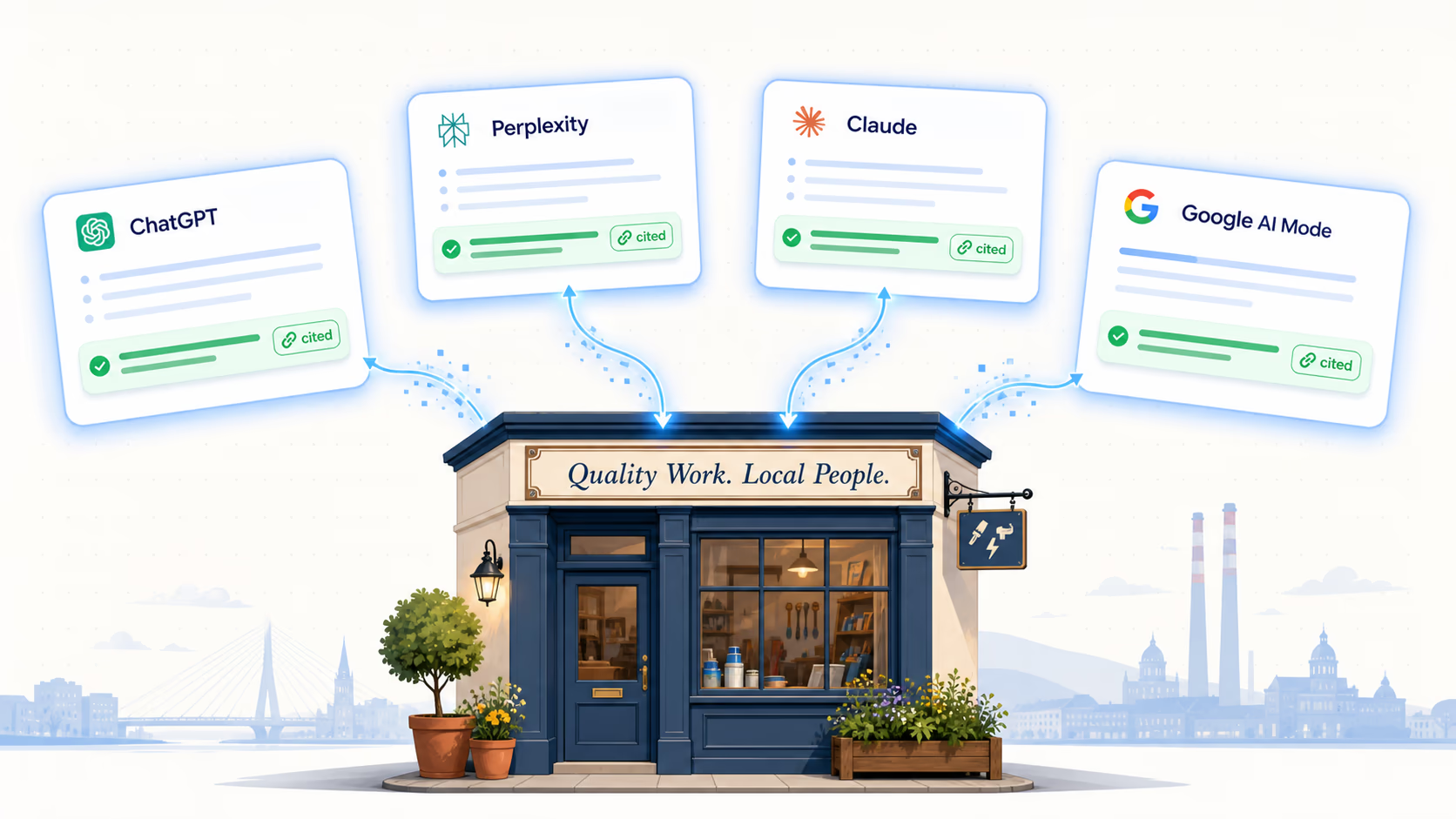
Generative Engine Optimisation (GEO) is the practice of optimising your business\'s content, entity signals, schema, and third-party citation footprint so that generative AI engines select your business as a citation when answering buyer queries. Where classic SEO optimises for "be in the top 10 blue links", GEO optimises for "be one of the 3–5 sources the AI cites in its answer". The two share fundamentals, content quality, structured data, link authority, but the signal mix that earns AI citations is meaningfully different from the signal mix that earns blue-link rankings.
The term was coined in academic research in 2023 (Aggarwal et al., "GEO: Generative Engine Optimisation") and has since become the industry shorthand for AI search optimisation. The practical reality for local businesses: a meaningful share of "best X near me" and "X vs Y" queries now resolve in AI surfaces, and not being cited there is the equivalent of not being on page one of Google a decade ago.
GEO vs SEO: how they actually differ
The overlap is real, schema, entity authority, citable content, and third-party citations all help both. The differences sit at the margin but are decisive:
- Bing visibility weighs more for GEO than for SEO, ChatGPT search uses Bing\'s index. Google\'s share of "search" is smaller in the GEO context.
- Reddit, Boards.ie, and Quora weigh much more for GEO, engines look for "real opinion" signals to corroborate claims. Classic SEO mostly ignores these surfaces.
- Comparison and listicle content is disproportionately citation-worthy in GEO, engines have a structural preference for the format because it\'s already optimised for citation extraction.
- Entity authority is foundational for GEO, without a clean entity record, every other tactic underperforms. SEO can muddle through with weaker entity signals; GEO can\'t.
- Schema is required, not optional, for GEO, engines use schema as ground-truth for facts. Sparse schema = sparse citations.
For practical purposes: do classic local SEO well, then layer on the four GEO-specific pillars (Bing, Reddit/forums, comparison content, citation monitoring). The same body of work feeds both channels.
Entity authority + knowledge graph
FoundationGenerative engines don't cite "websites", they cite entities. Your business is an entity in the same way a person, place, or brand is. To be citable, the engine must know (a) you exist, (b) what category you operate in, (c) where you operate, and (d) you're distinct from similarly-named businesses. This is established through structured data on your own site (Organisation, LocalBusiness, Person schema), Google Business Profile, Wikipedia or Wikidata where appropriate, LinkedIn Company Page, and consistent NAP across authoritative directories. Without this foundation, every other GEO tactic underperforms because the engine can't reliably attribute citations to "you" rather than to a competitor with a similar name.
How to implement
- Schema baseline, Organisation + LocalBusiness with stable @id URIs across every page. Person schema for your founder. Service schema for each offering.
- Google Business Profile, primary category, every Services field filled, 10+ photos, weekly posts, active Q&A. See our GBP checklist.
- NAP consistency, exact match across Google, Yelp, Golden Pages, Local.ie, Irish Times Directory, LinkedIn, Facebook. Inconsistency is interpreted as ambiguity.
- LinkedIn + Crunchbase, even for service businesses, these strengthen entity disambiguation.
- Wikidata entry, for established businesses with verifiable third-party coverage. Self-created Wikidata entries that lack sourcing get pruned.
Citable content engineering
CoreA "citable passage" is a self-contained 2–4 sentence paragraph that makes a specific factual or opinion-grounded claim. Generic prose ("Our team is dedicated to delivering quality results for our clients across Ireland") contains zero citable units. A page can rank #1 on Google and still be skipped by every AI engine because its prose is too vague to extract. The fix is structural: lead each section with an answer-first paragraph, follow with explanation and evidence, and close with comparison or contrast where relevant. Three patterns earn the most citations across ChatGPT, Perplexity, Claude, and Google AI Mode: answer-first paragraphs, comparison passages, and listicle items with clear differentiators.
How to implement
- Answer-first paragraph, 2–4 sentences that fully answer the section's implied question. Could stand alone as a citation.
- Comparison structure, "X works best for case A; Y works best for case B." Engines quote these directly when answering "X or Y" queries.
- Listicle items, numbered or bulleted lists with each item having a clear differentiator. AI engines often quote a single list item.
- FAQ blocks, Q&A pairs are the highest-density citable structure. Mark them up with FAQPage schema.
- Original data, surveys, internal benchmarks, first-hand observations. Bland synthesis of competitor content earns no citations.
Third-party citation diversity
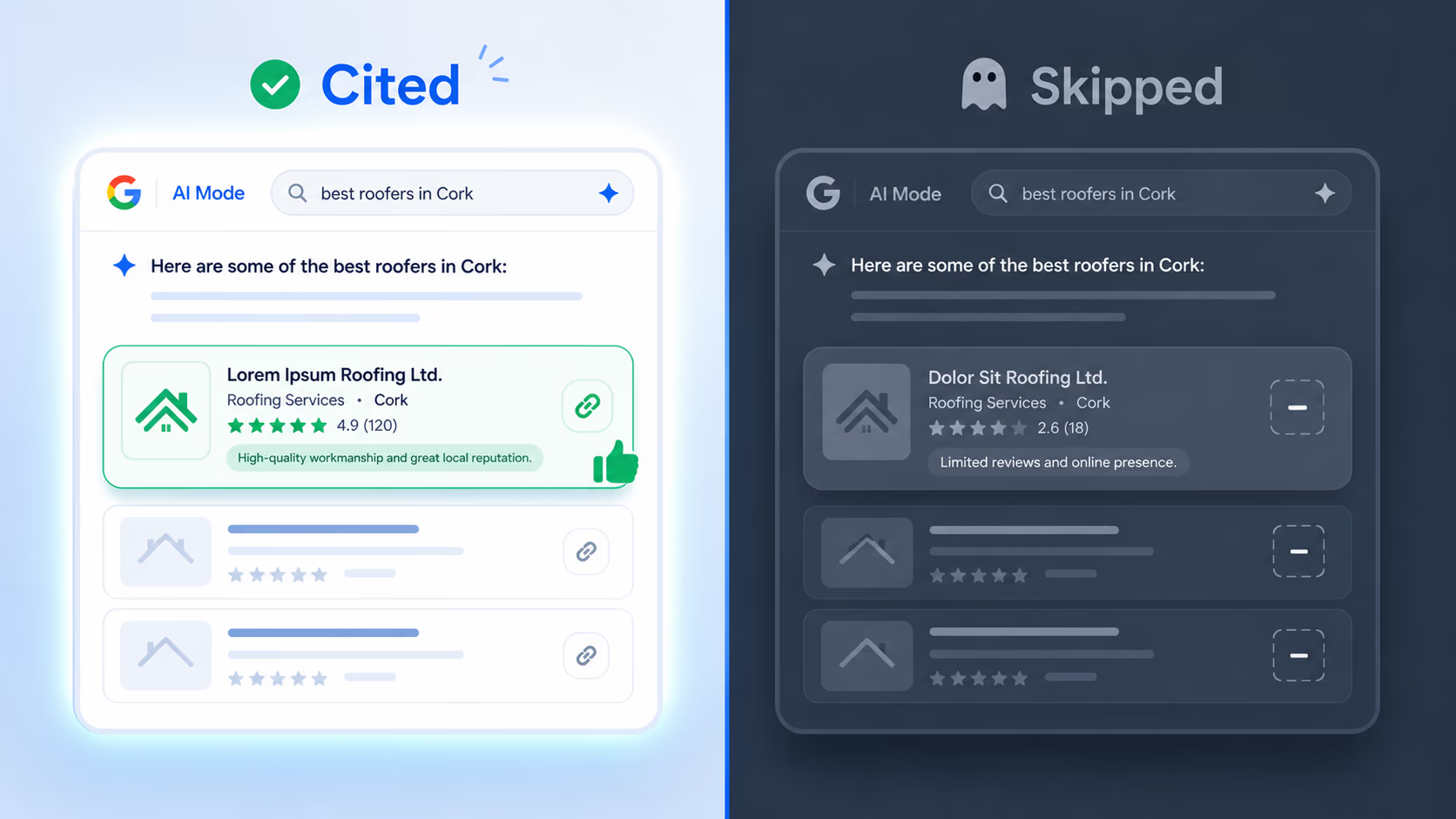
CoreWhen an AI engine considers citing your business, it cross-references the claim across multiple sources. If only your own site says "Acme is the best painters in Dublin", that's a low-trust signal. If three independent third-party sources, a listicle on a regional publication, a Reddit thread, an Irish Times article, also reference Acme positively, the engine treats the claim as well-supported and cites it. Citation diversity matters more than citation volume. Five mentions across five different domain types (publication, forum, directory, podcast transcript, comparison page) outperform fifty mentions on a single directory.
How to implement
- Tier-1 publications, Irish Times, Silicon Republic, RTÉ, Independent.ie. One feature here is a 12× multiplier for AI citation likelihood.
- Forums + Reddit, r/ireland, r/AskIreland, Boards.ie. Authentic participation only, engines penalise spammy patterns.
- Comparison pages, third-party "Best X in Ireland" listicles where your business is included.
- Podcast transcripts, searchable transcripts of podcast appearances become citation-grade content.
- For full link-building tactics, see our link building Ireland guide.
Schema density and accuracy
FoundationSchema markup doesn't directly cause citations, but it dramatically increases the rate at which existing entity authority converts into actual citations. When an engine considers quoting "Acme offers emergency plumbing in Dublin", it cross-references your schema. If your Service schema lists "Emergency Plumbing" with areaServed "Dublin, Ireland", the engine cites with high confidence. If schema is missing or contradicts the page content, the engine either falls back to less reliable sources or omits you to avoid hallucination. Five schema types matter most for local businesses: Organisation, LocalBusiness, Service, FAQPage, Review/AggregateRating.
How to implement
- Organisation + LocalBusiness, your entity record. Use stable @id fragments and cross-reference identifiers.
- Service schema, one entry per offering. Include name, description, areaServed (Country: Ireland + specific cities), and serviceType.
- FAQPage schema, every FAQ section marked up. AI engines pull FAQ Q&A pairs as direct quote candidates.
- Review + AggregateRating, feeds the engine's "is this business well-regarded" assessment.
- Validate continuously, Google's Rich Results Test + Schema.org validator catch breaks. Schema that errors silently is worse than no schema.
Bing + alternative-search visibility
CoreWhen ChatGPT runs a web search to answer a query, the search itself happens on Bing, not Google. Your Bing visibility directly determines your ChatGPT citation rate for live-search queries. Most local businesses (and their agencies) have never logged into Bing Webmaster Tools, never submitted a sitemap to Bing, and have weak Bing rankings as a result. The fix is straightforward but rarely done: claim Bing Webmaster Tools, submit your sitemap, fix Bing-specific crawl issues, and earn the same citations that build Google authority. Bing's ranking factors weight exact-match domain signals and on-page keyword usage slightly more heavily than Google, which actually favours niche local businesses.
How to implement
- Bing Webmaster Tools, claim, verify, submit sitemap. 90% of local businesses haven't done this.
- Bing Places for Business, the Bing equivalent of Google Business Profile. Free, takes 20 minutes, materially affects ChatGPT citations.
- DuckDuckGo, Brave Search, Yandex, secondary surfaces. DuckDuckGo uses Bing's index; Brave runs its own; Yandex matters in some industries.
- Monitor Bing rankings separately, your Google ranking doesn't predict your Bing ranking, which doesn't predict your ChatGPT citation rate.
Reddit + Boards.ie + forum presence
AdvancedWhen an AI engine answers "best painters in Dublin", it doesn't just look at agency websites, it looks for what real people say. Reddit, Boards.ie, and Quora are the primary sources for that "real opinion" signal. A single positive recommendation in an r/ireland thread can move citation rates more than a dozen niche-edit backlinks. The key is authentic participation, not spam. Engines (and the platforms themselves) penalise obvious self-promotion, and a Reddit account with one post recommending its own business gets ignored. The pattern that works is sustained genuine participation, answer 30 questions in your category over 6 months, then occasionally reference your own business when it's genuinely the best answer.
How to implement
- Pick 3 forums, for Irish businesses, that's typically r/ireland, r/AskIreland, and Boards.ie (with the relevant sub-board).
- Build the account first, 30+ helpful comments before any self-reference. Anything less reads as a sock-puppet.
- Reference yourself rarely and contextually, "I run a painting business in Dublin so I'm biased, but…" beats every alternative.
- Quora answers, long-tail compounding. Well-written answers continue earning citations for years.
- Don't outsource this, generic VA-written forum posts are detectable and counter-productive.
Comparison + listicle inclusion
CoreAI engines have a structural preference for listicle and comparison content because the content format is already optimised for citation extraction, each item is self-contained, named, and differentiated. When a query asks "best painters in Dublin", the engine often quotes a listicle entry verbatim. Earning inclusion in third-party listicles is one of the most effective GEO tactics for local businesses. Two paths work: (1) earn inclusion in existing listicles through outreach + genuine quality; (2) commission or pitch your own original listicles to publications that don't have one for your category yet. The same applies to "X vs Y" comparison pages, being the named alternative on a competitor's comparison page is high-cite-rate placement.
How to implement
- Find existing listicles, "best [your category] in [Irish city]" + Google search. Filter for listicles with publication-grade authority.
- Outreach with value, pitch the listicle owner with a specific reason your business should be added (genuine differentiation, recent award, original data).
- Pitch your own listicles, to Irish publications that haven't covered your category. Editorial value first, citation second.
- Build internal comparison pages, "[Your business] vs [Competitor]" pages on your own site become citation surfaces too.
- Maintain accuracy, when listicles age, they get pruned. Refresh your listed entries annually.
Citation monitoring and iteration
AdvancedUnlike Google blue-link rankings, which are relatively stable and easy to track, AI citations vary by query phrasing, conversational context, and model version. A query that cites you today may cite a competitor next week if their entity authority improves or a new third-party article surfaces. The only reliable optimisation loop is structured monthly monitoring: define a target query set, run those queries across ChatGPT, Perplexity, Claude, and Google AI Mode, log the citations, and ship one improvement per month based on the gap. Manual checks work for 5–10 queries; for larger sets, AI visibility tools like Profound, Otterly, or AthenaHQ track citations at scale. For more on AI Mode specifically, see our Google AI Mode in Ireland guide.
How to implement
- Define 20 target queries, what would a buyer actually type/say? Mix navigational, comparison, and recommendation queries.
- Run monthly across 4 engines, ChatGPT, Perplexity, Claude, Google AI Mode. Document citation source for each.
- Track three metrics, citation rate (queries that mention you / total), citation source (your site vs third-party), citation accuracy (correct facts).
- Ship one improvement per month, schema fix, new comparison page, citation outreach, content rewrite. Citations move within 4–8 weeks.
- Tooling for scale, Profound, Otterly, AthenaHQ, SE Ranking AI Visibility. Manual works to 10–20 queries; automate beyond.
The 30-day implementation roadmap
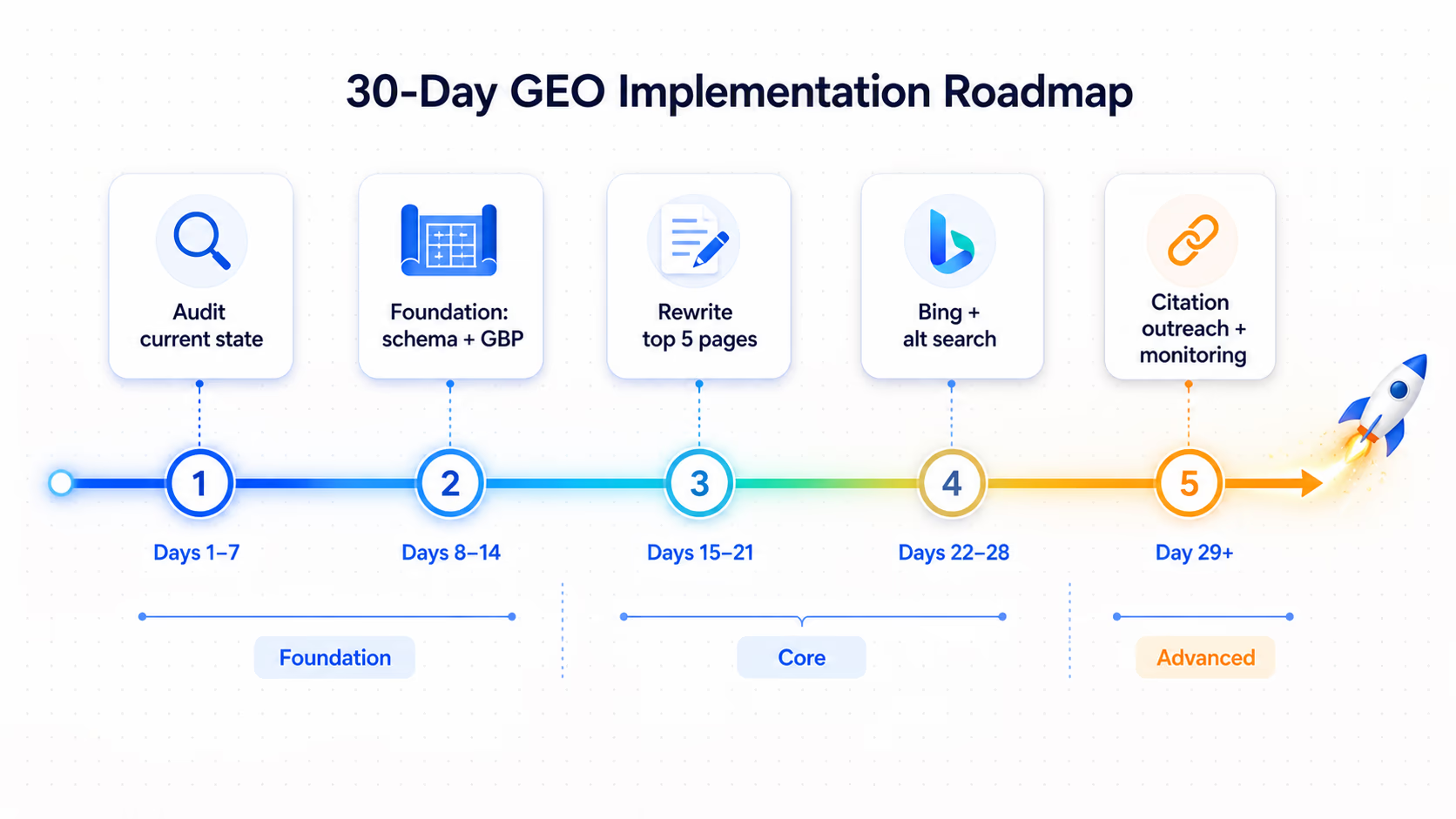
You don\'t implement eight pillars at once. Foundation first, core second, advanced third. The order below is the one Webjuice uses for new GEO engagements with local service businesses:
- Days 1–7, Audit current state. Run target queries on ChatGPT, Perplexity, Claude, and Google AI Mode. Document who\'s cited and from which sources. Identify the pillar gaps.
- Days 8–14, Foundation. Ship Organisation + LocalBusiness + Service + FAQPage schema. Audit and fix Google Business Profile. Verify NAP consistency across top 12 directories.
- Days 15–21, Core content. Rewrite top 5 pages with answer-first paragraphs, comparison passages, and FAQ schema. Add original data or first-hand observations to each.
- Days 22–28, Bing + alternative search. Claim Bing Webmaster Tools, Bing Places. Verify ChatGPT can find your site via direct URL queries.
- Day 29+, Citation building begins. Outreach to listicles, publications, and comparison pages. Reddit and Boards.ie account warm-up. Set up monthly citation monitoring loop.
By day 30 you\'ve shipped the foundation. By day 90, citations should start appearing across AI engines for foundation-pillar queries. By day 180, the core and advanced pillars compound and citation rate stabilises at a defensible level.
Frequently asked questions
Is GEO different from AEO (Answer Engine Optimisation)?
Mostly the same thing with different framing. GEO emphasises generative AI engines (ChatGPT, Perplexity, Claude, Google AI Mode) and the citation-selection process. AEO is older terminology that originally referred to optimising for featured snippets and "answer boxes" in classic search. As AI engines became the dominant answer surface, the two converged, most practitioners use them interchangeably now.
Should local businesses do GEO before, after, or alongside SEO?
Alongside, and the foundation pillars overlap. A clean schema implementation, consistent NAP, and citable content help both. The GEO-specific pillars (Bing, Reddit/forums, comparison inclusion, citation monitoring) layer on top of an existing SEO baseline. If your SEO is broken, fix that first; the GEO work is multiplicative on top of working SEO.
What\'s the biggest GEO mistake local businesses make?
Skipping the entity authority foundation. Most local businesses jump straight to "publish more content" or "build more backlinks" without ever establishing a clean entity record. Without that foundation, AI engines can\'t reliably identify the business as distinct from similarly-named competitors and citation rates stay low even when the rest of the work is solid.
Do I need original research or surveys for GEO to work?
It helps significantly but isn\'t mandatory. Original data, even a small internal benchmark, a survey of 50 customers, or a first-hand observation from a year of work, earns disproportionate citation weight because AI engines value novel facts over recycled synthesis. If you can\'t do original research, opinion-grounded content (specific recommendations with reasoning) is the next-best thing.
How long until GEO drives measurable revenue?
Citations start appearing in 4–8 weeks for foundation-pillar work. Lead and revenue impact follows 30–60 days behind that as cited content drives clicks. Realistic timeline: first attributable AI-channel leads in 3–4 months, meaningful share of total lead flow by month 6–9. Faster than classic SEO because the channel is less competitive.
Can I do GEO myself or do I need an agency?
The foundation work (schema, GBP, NAP audit) is doable in-house with a technical owner and 20–40 hours over a month. The core and advanced pillars (third-party citation building, Reddit/forum strategy, ongoing monitoring) usually justify an agency because they require sustained outreach effort and tooling. Webjuice handles the full engagement for businesses that want it managed end-to-end.
Will Google penalise GEO tactics?
No, the work is the same work Google rewards. Schema, entity authority, citable content, and authoritative third-party citations all align with Google\'s own quality signals. The only "GEO tactics" Google would penalise are spammy ones (mass-generated forum posts, fake reviews, schema spam) which are penalised in classic SEO too. Done well, GEO is just modern SEO with the AI-channel signal mix added.
What tools do I need for GEO?
Minimum: Google Search Console, Bing Webmaster Tools, Google Business Profile manager, schema.org validator, and a manual query log (spreadsheet) for monthly citation tracking. Optional/scaling: AI visibility platforms like Profound, Otterly, AthenaHQ, or SE Ranking AI Visibility for tracking citations across hundreds of queries automatically.