

The Power of Blog Commenting – Your Strategy for Visibility, Authority, and Community
In the dynamic world of digital marketing and online presence, building meaningful connections is paramount. While creating exceptional content forms the cornerstone of any successful strategy, a frequently underestimated tool for amplification and growth lies in the comment section. Blog commenting, when executed with purpose and authenticity, transcends mere interaction; it becomes a powerful catalyst for enhancing site visibility, bolstering SEO, and cultivating a loyal community. This comprehensive guide explores how strategic blog commenting serves as a multi-faceted asset for bloggers and readers alike.
Beyond simply leaving a remark, thoughtful commentary establishes your expertise, fosters valuable relationships with industry peers, and drives targeted referral traffic back to your platform. For search engine optimisation, genuine comments generate quality backlinks and user-generated content, signalling authority to algorithms and improving organic rankings. Simultaneously, for readers and community members, active participation enriches the conversational ecosystem, provides diverse perspectives, and creates a network of shared knowledge. We will detail the proven benefits, outline best practices for crafting high-impact comments, highlight common pitfalls to avoid, and demonstrate how consistent, value-driven engagement can transform your online influence. Mastering this art is not just about adding your voice—it’s about integrating into the digital dialogue to fuel sustainable growth and establish undeniable authority in your niche.
Key Takeaways
- Blog commenting has several good benefits for online engagement and marketing. It helps build lively online communities where readers and bloggers can connect and share ideas.
- When done carefully, comments can improve SEO through backlinks. This, in turn, helps content get seen more and rank higher in search engine results.
- Joining blog discussions allows you to show your knowledge and build trust within the community.
- Real and thoughtful comments help keep conversations going. This leads to stronger relationships and chances for networking.
- Quick replies to comments show that you care. This creates a sense of community and gets readers more involved.
Importance of Blog Commenting
Blog commenting is important for creating online communities and improving SEO.
It builds connections, nurtures relationships, and boosts user engagement.
Blogs and forums act as spaces for these valuable talks, allowing different opinions to grow.
Blog commenting helps increase visibility by creating backlinks.
These backlinks are like votes for search engines to show your content is valuable.
Regular comments keep you updated on industry trends.
Engaging with comments on your blog helps create user-generated content.
Search engines like this kind of content.
By focusing on blog comments, you improve your online presence and build a community that values interaction.
Benefits for Bloggers
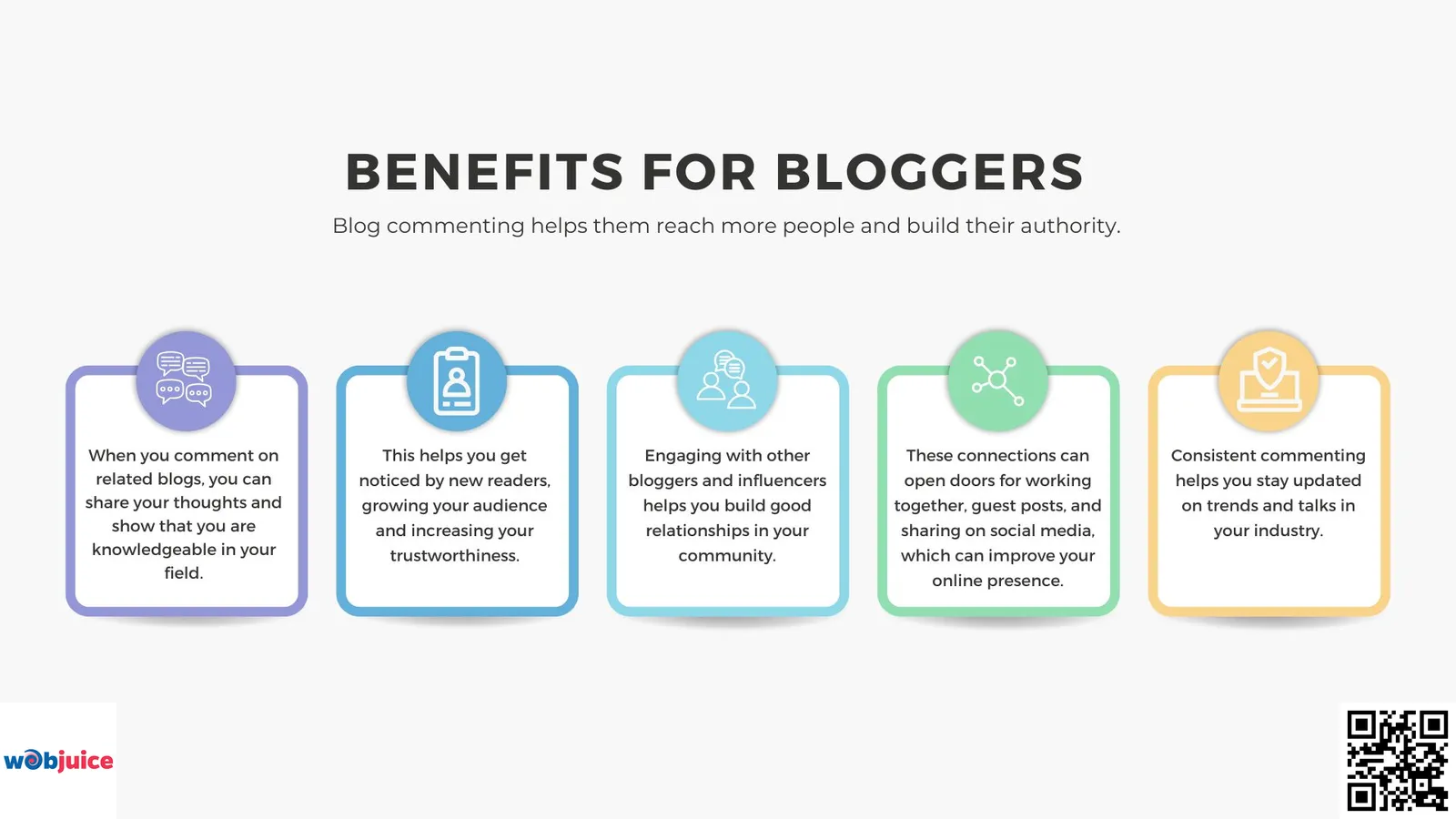
Blog commenting helps them reach more people and build their authority.
When you comment on related blogs, you can share your thoughts and show that you are knowledgeable in your field.
This helps you get noticed by new readers, growing your audience and increasing your trustworthiness.
Link building with clever comments is a strong SEO technique.
It can boost your online presence and authority.
Leaving smart comments with good keywords makes backlinks.
Search engines prefer sites with quality inbound links.
Engaging with other bloggers and influencers helps you build good relationships in your community.
These connections can open doors for working together, guest posts, and sharing on social media, which can improve your online presence.
Be real and helpful in your comments to create a connection and help others feel encouraged to engage back.
Consistent commenting helps you stay updated on trends and talks in your industry.
When you stay informed, you can make content that connects with your audience.
This way, your blog stays interesting and fresh.
Benefits for Readers
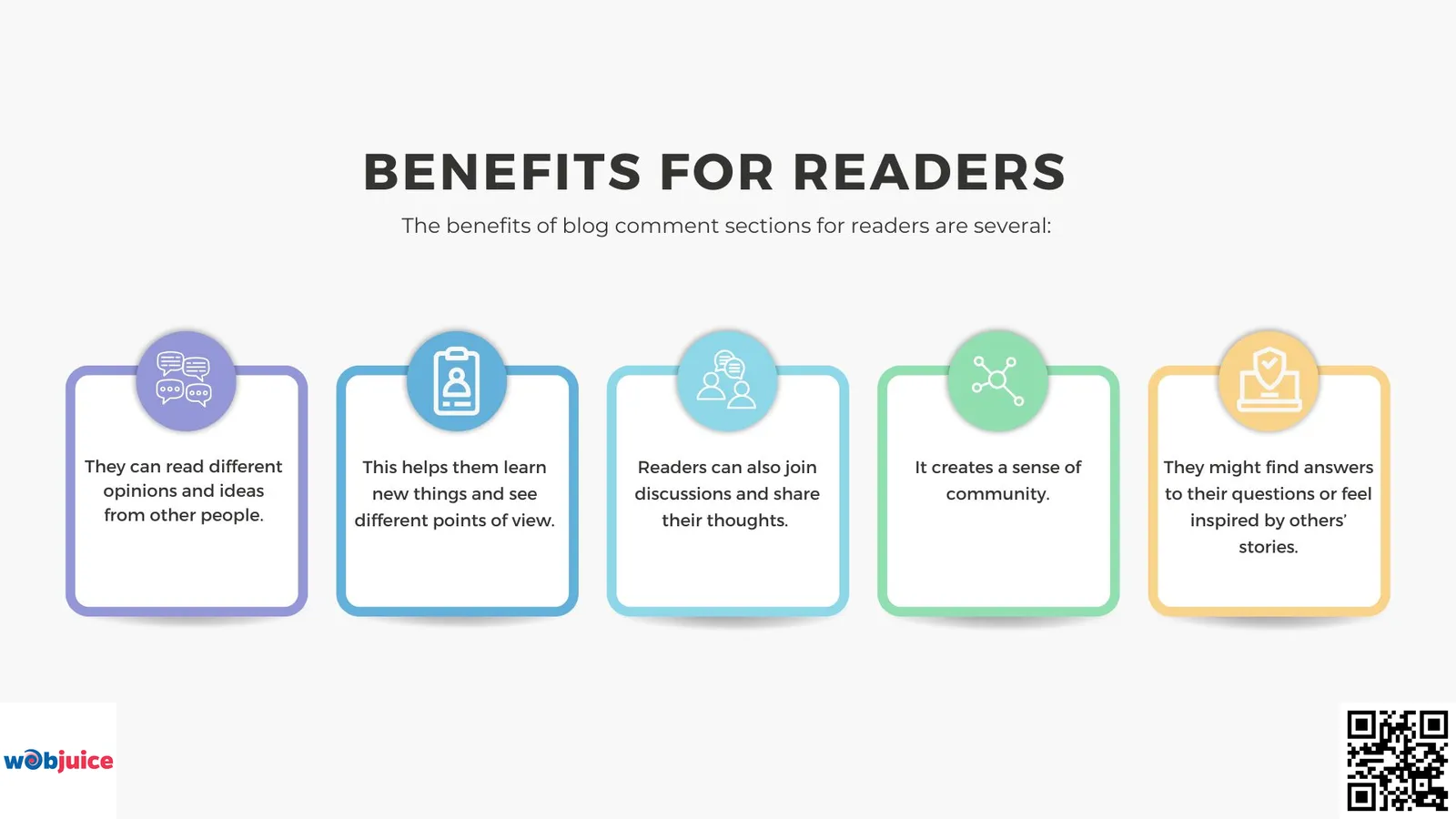
The benefits of blog comment sections for readers are several:
- They can read different opinions and ideas from other people. This helps them learn new things and see different points of view.
- Readers can also join discussions and share their thoughts. It creates a sense of community.
- Additionally, they might find answers to their questions or feel inspired by others’ stories.
Overall, blog comment sections can make reading more interactive and enjoyable.
Crafting Thoughtful Comments

Writing meaningful comments on blogs helps connect with others in the community.
It makes the blog experience better for all who take part.
Brand mentions in comments can make both the commenter and the blog more visible.
This creates a helpful interaction.
By joining in and sharing good thoughts, you improve the talks.
You also put yourself forward as an important part of the conversation.
Thoughtful comments show you have read and understood the content.
They make the conversation better.
They help spark more discussion.
Making these comments takes time and effort.
But it is worth it for the connections and insights you gain.
Importance of Engagement
Writing smart and related comments adds to conversations and shows what you know.
This can tell blog owners and readers that you are skilled, which builds your authority in your area.
Meaningful comments can help create backlink chances and improve visibility.
Search engines like engagement, which may lead to better rankings.
Engaging often with popular bloggers boosts credibility and opens up chances for partnerships or guest posts.
Your comments can start a conversation.
This can push others to check out your profile or website.
This kind of traffic is very helpful.
It often leads to more people taking action.
Building Community Connections
When you engage deeply with blog posts, you’re not just making noise; you’re building relationships.
Each comment is a chance to share ideas, ask questions, and show thanks for what the author has done.
This practice helps you stand out and shows that you are respected in the community.
When you join conversations, you boost your website’s backlinks and referral traffic.
By being an active member of the blogging community, you improve your online reputation and trust.
In the end, meaningful commenting is not only about adding your thoughts.
It’s also about creating a system that helps you grow and improves your online presence.
So, get involved and start making those connections!
Enhancing Conversation Quality
When you read a blog post, think about what the author means and the points they make.
Take some time to think before you write.
Your thoughts can lead to deeper talks, showing that you care about the topic and the community.
To make your comments unique, ask open-ended questions or share personal experiences that connect to the post.
Keep in mind, quality is more important than the number of comments.
Moreover, smart comments can help your online presence.
When you add helpful thoughts, you put yourself as someone who knows a lot, which can lead others to check out your blog or website.
In the long run, spending time on your comments can bring great rewards.
Get involved, share helpful thoughts, and see how the talk changes.
By doing this, you will improve not only the feel of the talk but also how others see you in the group.
Common Mistakes to Avoid
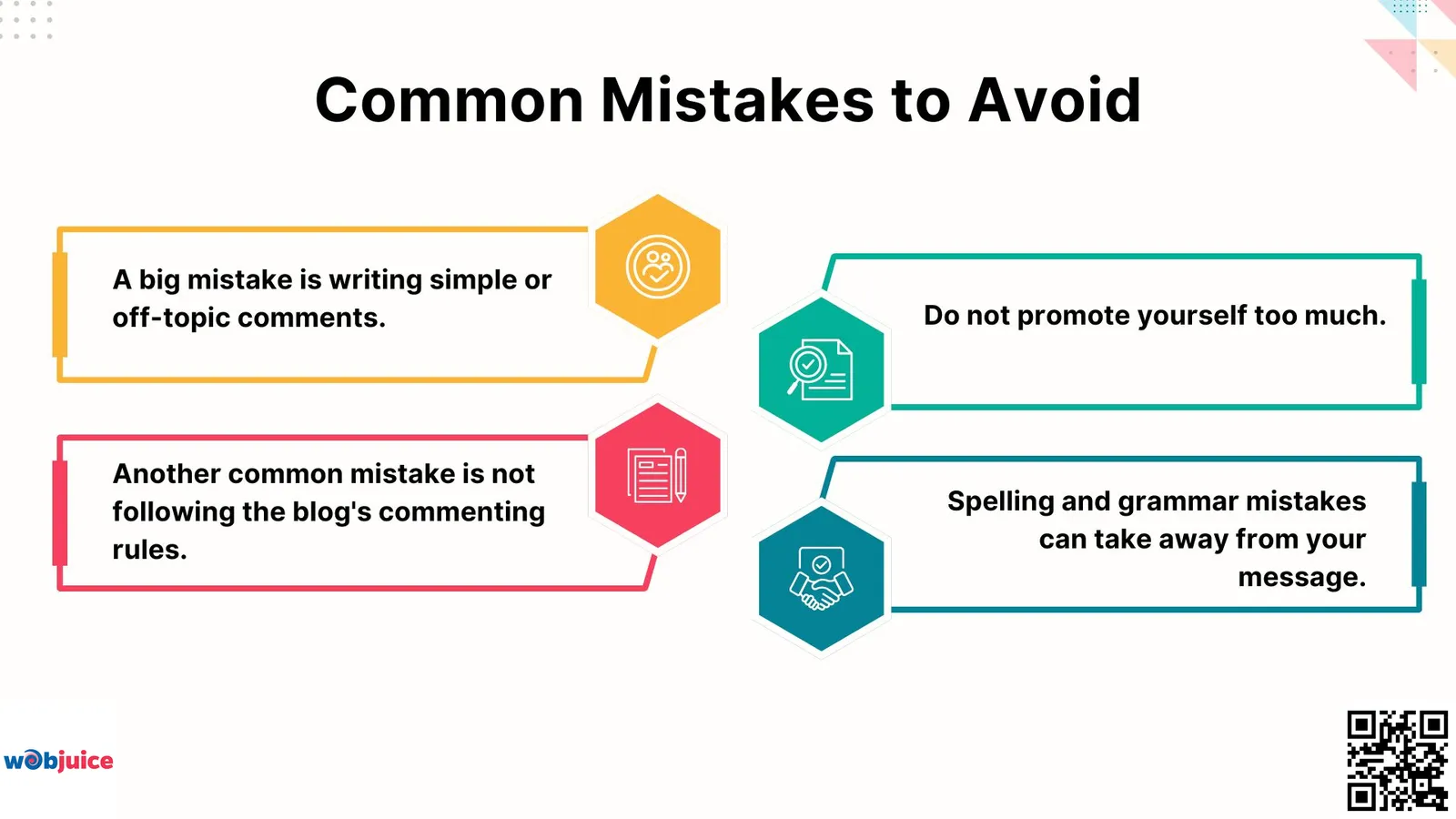
The most common mistakes in blog comments include leaving basic comments, not following guidelines, promoting yourself too much, and not checking your writing for errors.
A big mistake is writing simple or off-topic comments.
These comments don’t help anyone and can hurt how others see you in the community.
Instead, think about giving good ideas that connect to the post.
Try to share useful content that matches the blog’s topic and what the readers care about.
Another common mistake is not following the blog’s commenting rules.
Always read these guidelines before you get involved.
Additionally, do not promote yourself too much.
Instead, try to create real connections by taking part in talks.
Lastly, remember to proofread your comments.
Spelling and grammar mistakes can take away from your message.
They can also make you seem unprofessional.
Best Practices for Engagement
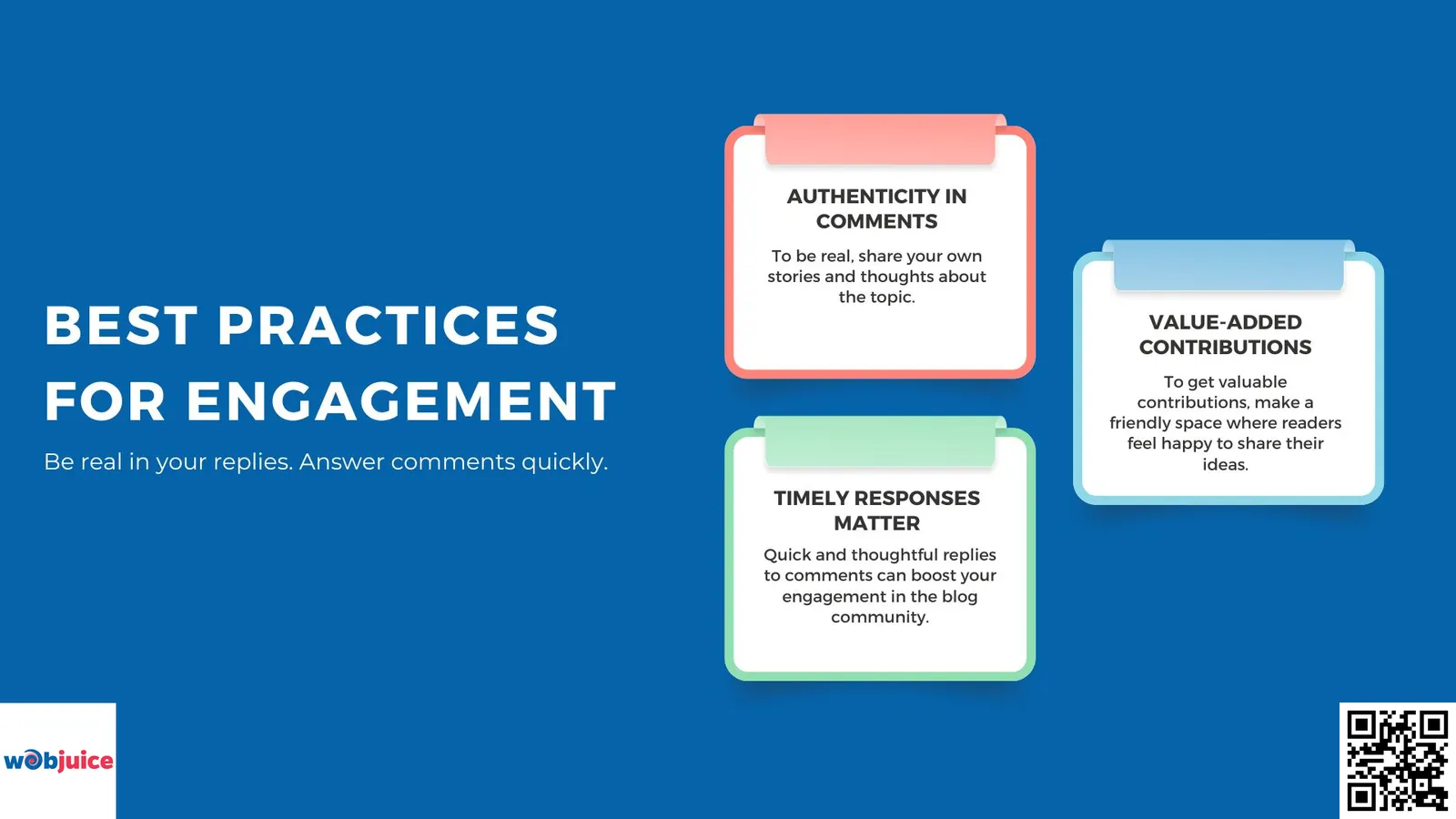
Be real in your replies. Answer comments quickly.
Make sure your contributions are helpful.
Use good link-building strategies to make your blog more visible and respected.
These ideas help create a community that values your thoughts.
Your audience will appreciate your honest way of communicating.
Quick answers show you care about what they say.
Good contributions make readers want to return for more.
Strong link building helps search engines see how important your blog is.
Authenticity in Comments
To be real, share your own stories and thoughts about the topic.
This helps to improve the talk and gets others to join in.
Don’t use common comments; instead, ask questions or give helpful feedback that shows you care.
When you get involved in blogs with honesty, it can create links back to your site and help you get noticed more, which is important for SEO.
When you show that you are a reliable commenter, other readers might check out your page or website.
Embrace honesty in your comments.
You will see how it changes your blogging experience.
Real interactions not only improve discussions but also build your reputation.
This makes you an important voice in your area.
Timely Responses Matter
Quick and thoughtful replies to comments can boost your engagement in the blog community.
When you answer fast, it shows that you care about your readers.
Responding quickly helps build a sense of community, making your blog feel like a welcoming place for discussions.
Quick responses can bring in more visitors.
Users are more sure to come back if they feel you care about what they say.
Also, responding fast can help clear up any questions or worries that come up.
This can stop misunderstandings and build trust.
Readers view you as friendly and informed, which can lead to loyal fans.
It is important to check comments often.
Set aside time each day to talk with your audience.
Value-Added Contributions
To get valuable contributions, make a friendly space where readers feel happy to share their ideas.
Start by asking thoughtful questions about your content.
This not only gets people talking but also encourages your audience to connect more with the topic.
Get readers to share their experiences or thoughts.
This helps make the conversation better and improves your blog’s visibility.
When real interactions happen, search engines notice more user activity, which can lead to better rankings.
Also, reply to comments with good feedback. Recognize what they share.
This builds a community feel and encourages more people to join in.
When readers feel that their voices matter, they are more likely to come back and share again.
Blog Commenting Strategy FAQs
Discover how strategic blog commenting can boost your SEO, build authority, and grow your online community. Get detailed answers to the most common questions about effective blog engagement.
1. How does blog commenting directly improve my website’s SEO?
Blog commenting contributes to SEO optimization through several key mechanisms. Primarily, when you include a link to your website (where allowed by the blog’s policy), it creates a contextual backlink. Search engines like Google view these as endorsements, suggesting your site is a valuable resource, which can positively influence your domain authority and ranking for relevant keywords.
SEO Benefit: Each quality comment with a relevant link signals to search algorithms that your content is authoritative, potentially improving your visibility in search results for targeted keywords.
Furthermore, meaningful comments generate user-generated content around a topic, adding semantic relevance and fresh signals to the page, which search engines favour. The increased engagement metrics—such as time on page and lower bounce rates from genuine discussions—also serve as positive ranking factors, indicating the content is valuable to users.
For maximum SEO impact, ensure your comments are:
- Relevant and topic-specific to align with the page’s content theme
- Substantive (at least 2-3 sentences) to demonstrate genuine engagement
- Placed on authoritative sites within your niche for maximum link value
- Natural and non-spammy to avoid penalties from search engines
2. What are the most common mistakes to avoid when commenting on blogs?
Avoiding common pitfalls is crucial for maintaining a positive online reputation and maximizing the benefits of blog commenting. Key mistakes include:
- Generic or Spammy Comments: Posts like “Great post!” or “Thanks for sharing” add no value and are often flagged as spam. Always write something specific to the article’s content that demonstrates you’ve actually read it.
- Excessive Self-Promotion: Leading with a link or overly promoting your own product/service is a major turn-off. The focus should be on adding to the conversation, not advertising. The “80/20 rule” applies here: 80% value addition, 20% promotion (and only when relevant).
- Neglecting the Guidelines: Failing to read the blog’s specific commenting rules can lead to immediate deletion of your comment. Many blogs have policies about link inclusion, comment length, and acceptable content.
- Poor Grammar and Spelling: Sloppy writing undermines your credibility and professionalism. Always proofread before submitting.
- Being Argumentative or Off-Topic: Disagreeing respectfully can foster healthy debate, but aggressive or irrelevant remarks damage your standing within the community and may get you banned.
Pro Tip: Comments that add value to the discussion are more likely to remain published long-term, providing sustained SEO benefits through permanent backlinks and ongoing visibility.
3. How can I craft a comment that truly adds value and gets noticed?
A high-value comment demonstrates you have read, understood, and reflected on the content. Follow this three-part structure for maximum impact:
- Acknowledge & Relate: Start by mentioning a specific point from the article you found insightful. (“Your analysis of [specific topic] resonated with me because…”). This immediately shows you engaged with the content.
- Add Unique Insight: Share a relevant personal experience, a complementary piece of data, or a thoughtful perspective that expands the discussion. This is where you showcase your expertise without overt self-promotion. For example: “In my experience working with [specific scenario], I’ve found that [additional insight].”
- Engage Politely: End by asking an open-ended question to encourage further dialogue from the author or other readers. (“Have you considered how [related concept] might affect this approach?”).
By providing original perspective, you become a memorable part of the conversation, increasing the likelihood of engagement from the author and others, which amplifies your visibility. Additionally, well-crafted comments that include relevant keywords naturally can enhance the semantic SEO value of both your comment and the original article.
SEO Benefit: Comments that spark further discussion increase “dwell time” on the page, a positive engagement signal that search engines may interpret as content quality, potentially boosting the page’s rankings.
4. Is it beneficial to respond to comments on my own blog, and how quickly should I reply?
Absolutely. Responding to comments on your own blog is non-negotiable for community building and SEO. Prompt replies (ideally within 24 hours) signal to both your audience and search engines that your site is active and fosters engagement. This practice delivers multiple benefits:
- Boosts Dwell Time: Encourages readers to stay longer on your page as they check back for responses or engage in discussion threads.
- Creates More Content: The dialogue adds fresh, keyword-rich content to the post, which search engines crawl regularly.
- Builds Loyalty: It shows readers you value their input, transforming them from passive visitors into a dedicated community that returns frequently.
- Clarifies Points: It allows you to address questions or misunderstandings, which improves user experience and content comprehension.
- Encourages More Comments: An active comments section with author participation creates a virtuous cycle, encouraging others to join the conversation.
From an SEO perspective, regular updates to your content (including new comments and responses) can signal freshness to search engines. Additionally, threaded conversations create natural internal linking and keyword variations that enhance topic relevance.
Best Practice: Set aside 15-20 minutes daily to respond to blog comments. This small investment yields significant returns in community engagement and potential SEO benefits.
5. Can blog commenting help me build relationships with other influencers in my niche?
Yes, strategic blog commenting is one of the most effective networking tools available for digital professionals. By consistently leaving insightful comments on the blogs of key influencers and thought leaders, you naturally get on their radar. This demonstrates your genuine interest in their work and your own expertise in the field.
This relationship-building approach works because:
- It’s Non-Intrusive: Unlike cold emails, comments are a natural way to engage with someone’s content in their own space.
- It Demonstrates Value First: You’re providing value (a thoughtful comment) before asking for anything in return.
- It’s Public Validation: Your insightful comment publicly validates their work, which most creators appreciate.
Over time, this can lead to reciprocal engagement on your own content, social media connections, and opportunities for collaborations such as guest posting, interviews, or joint ventures. It’s a foundational step in building a professional network built on mutual respect and shared interests, rather than a direct transactional ask.
SEO & Networking Synergy: These relationships often lead to high-quality backlinks from authoritative sites (when influencers link to your content), which are one of the strongest ranking factors in search engine algorithms.
To maximize relationship building through comments:
- Identify 5-10 key influencers in your niche
- Engage with their new content consistently (not just once)
- Reference their work meaningfully in your comments
- Eventually, transition the relationship to email or social media after establishing rapport
Summary
Mastering Blog Commenting for Sustained Online Growth
To summarise, blog commenting is a profoundly strategic component of a holistic digital marketing and community-building strategy. It is far more than a passive activity; it is an active channel for achieving tangible results. By consistently engaging with precision and authenticity, you unlock a suite of critical benefits:
Enhanced SEO & Visibility: Quality comments create valuable backlinks and fresh content, improving your site’s authority and search engine rankings.
Strengthened Authority & Trust: Showcasing your knowledge in relevant discussions positions you as a credible expert, building trust within your industry.
Robust Community Development: Genuine interaction fosters relationships with both influencers and readers, creating a vibrant, engaged network around your brand.
Increased Traffic & Networking Opportunities: Thoughtful contributions drive curious readers to your own platform and open doors for collaborations and partnerships.
The key to success lies in moving beyond superficial remarks. Focus on providing value-added insights, responding promptly, and adhering to community guidelines. Avoid common mistakes such as self-promotion or generic replies. By prioritising meaningful engagement over quantity, you transform the comment section from a simple forum into a powerful engine for connection, credibility, and continuous online growth. Begin implementing these practices today to see a measurable improvement in your digital footprint and community engagement.