Link building in Ireland: 8 tactics that actually earn backlinks (and 5 that waste your money).
99% of "link building services" sold in Ireland are PBNs, mass-blasted guest posts, or directory spam — Google flags every one of these patterns. Real link building is small-volume, editorial, and senior-vetted. The 8 tactics below are the ones that actually move rankings for Irish businesses, ranked by leverage with realistic 2026 cost ranges. (For our agency take, see best link-building agencies in Dublin.)

Why link building still matters in 2026
Backlinks remain one of Google's strongest ranking signals. Every algorithm update over the last 15 years has tried to weight links more carefully, not less — penalising spam patterns while rewarding genuine editorial relationships. The links that move rankings in 2026 are smaller in volume than 2015 but higher in quality.
Three reasons quality link building still drives outsized SEO returns:
- Rankings: For competitive queries (anything more than ~3K monthly searches), backlinks are the difference between page 1 and page 4. SEO Dublin engagements rarely succeed without a deliberate link-building program.
- Brand-entity signal: Links from authoritative Irish publications (Irish Times, Silicon Republic, RTÉ) feed the entity-authority model that AI search engines like ChatGPT and Perplexity use to decide which businesses to cite.
- Referral traffic: A link from a relevant niche publication doesn't just move rankings — it sends qualified visitors directly. The right link converts faster than most paid clicks.
Niche edits (link insertions)
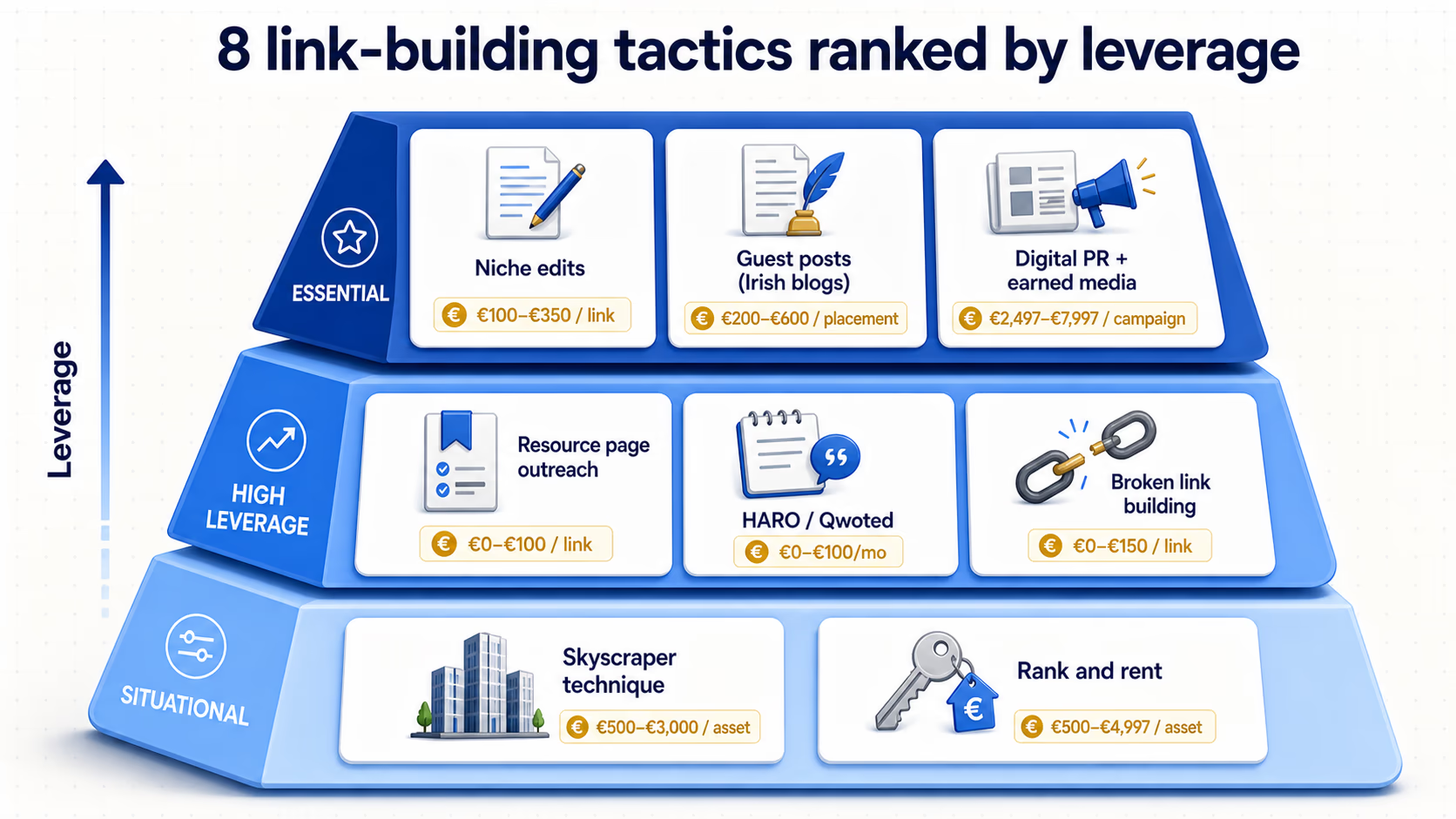
EssentialNiche edits insert your link into existing, indexed, topically-relevant content on third-party blogs. Faster than guest posts (no waiting for new content to index) and the host page already has accumulated authority. Highest cost-per-effort ratio for most campaigns.
How to do it
- Vet every prospect: domain rating (DR) 30+, organic traffic 500+/month, topical relevance must be obvious
- Reject any site selling explicit "link insertion" packages — Google flags these patterns. Genuine editorial relationships only
- Match anchor text to natural language — exact-match keyword anchors are penalty bait
- Audit the existing page for outbound link velocity — pages selling 20+ links are already devalued
- Aim for 60%+ of monthly link velocity from niche edits in early campaigns
Guest posts on relevant Irish blogs
EssentialGenuine guest posts on niche-relevant Irish publications build topical authority and earn followed contextual links. Slower than niche edits because the host page has to gain its own authority post-publication, but the editorial control is higher.
How to do it
- Pitch publications your buyers actually read — generic "tech blog" placements waste effort
- Lead with original data, opinion, or framing. Generic listicle posts get ignored
- Insert your link contextually within the body — not in the author bio (Google devalues bio links)
- Offer the editor 2–3 topical angles, let them pick the best one for their audience
- Build relationships before pitching — comment thoughtfully on 3–4 of their existing posts first
Digital PR + earned media
EssentialHighest-authority links you'll ever build. A single Irish Times feature is worth more than 50 niche edits combined for ranking impact and brand-entity signal. See our full press release strategy guide.
How to do it
- Build campaigns around newsworthy assets: original research, surveys, expert commentary, exclusive data
- Pitch journalists directly — wires alone rarely earn tier-1 pickups
- Personalise every pitch with reference to the journalist's recent work
- Offer exclusivity to top-choice outlet for 24–48 hours before going wider
- Track pickups, weighted by domain authority, not just count
Resource page outreach
HighMany Irish industry sites maintain curated "resources" or "useful links" pages. If your content is genuinely best-in-class for a topic those pages curate, an outreach email asking for inclusion converts at 3–8% — well above cold guest-post pitches.
How to do it
- Find resource pages with `intitle:resources` or `inurl:links` + your topic keyword in Google
- Filter for pages updated within the last 12 months — abandoned ones don't respond
- Pitch with the value first: "I noticed your page on X — we just published Y which would fit"
- Be honest: only pitch if your content actually beats what's already linked
HARO / Help A B2B Writer / Qwoted
HighJournalists post requests for expert sources daily. A useful, specific reply earns you a quote-and-link in articles you didn't pitch. Highest-leverage time investment in PR-style link building.
How to do it
- Set up email digest filters for your industry keywords
- Reply within 1 hour of a request landing — first-mover advantage matters
- Lead with the answer, not your bio. Save credentials for the signature
- Keep quotes specific, data-backed, and quotable — vague platitudes don't get used
Broken link building
HighFind pages linking to dead URLs in your niche, offer your live equivalent as a replacement. Conversion rate is moderate (5–10%) but the links earned are typically high-quality because the host page already has editorial intent.
How to do it
- Use Ahrefs or Semrush "broken outbound links" report on competitor backlinks
- Filter to pages on DR 40+ Irish or English-language domains
- Email the page owner with a brief, direct heads-up about the broken link + your replacement
- Don't ask for the link — offer the value, let them link if they want
Skyscraper technique
HighFind top-ranking content on your target topic, build something demonstrably better (more depth, fresher data, better visualisations), then outreach to everyone linking to the original. Effort-heavy but the resulting links are strong because the asset is genuinely worth linking to.
How to do it
- Pick topics where the current top-ranker is dated, thin, or visually weak
- Invest in original data, research, custom visuals — these are hard for competitors to replicate
- Outreach list: everyone linking to the original via Ahrefs backlinks export
- Email template: brief, value-first, "you linked to X — we just published a more current version"
Rank and rent (PBN-adjacent)
NicheBuild your own niche-targeted website, rank it for high-intent queries, then either rent leads to local businesses or use the asset to link back to your money sites. Adjacent to PBN risk territory — only viable when assets are genuinely valuable standalone properties, not link farms.
How to do it
- Build assets that have genuine value as standalone properties (real content, real audience)
- Avoid clear PBN footprints: same hosting, same Whois, same theme, link-pattern duplicates
- Limit links from rented assets to 1–2 per asset to your money site, on diverse anchor text
- High risk if executed lazily — Google's spam filters flag obvious networks. Most operators get burned
How to evaluate a prospect link
Most agencies and link sellers will offer you "DR50+ guaranteed" placements. DR alone tells you almost nothing — a high-DR site with 0 organic traffic is a link farm. Use these five filters before approving any prospect.
- Organic traffic: Ahrefs/Semrush minimum 500 monthly organic visits. Pages with no traffic don't pass meaningful equity.
- Topical relevance: The host page topic should overlap with yours. A general "tech" blog with one post about your niche is weaker than a niche-specific site at half the DR.
- Outbound link velocity: Pages selling 30+ outbound links per month are devalued. Look at the host's recent post history.
- Index status: Check the page is actually indexed.
site:domain.com/pagein Google. Unindexed pages don't pass anything. - Audience fit: Would your buyer actually read this site? If yes, the link is real. If no, you're paying for a citation that Google doesn't reward.
Common link-building mistakes
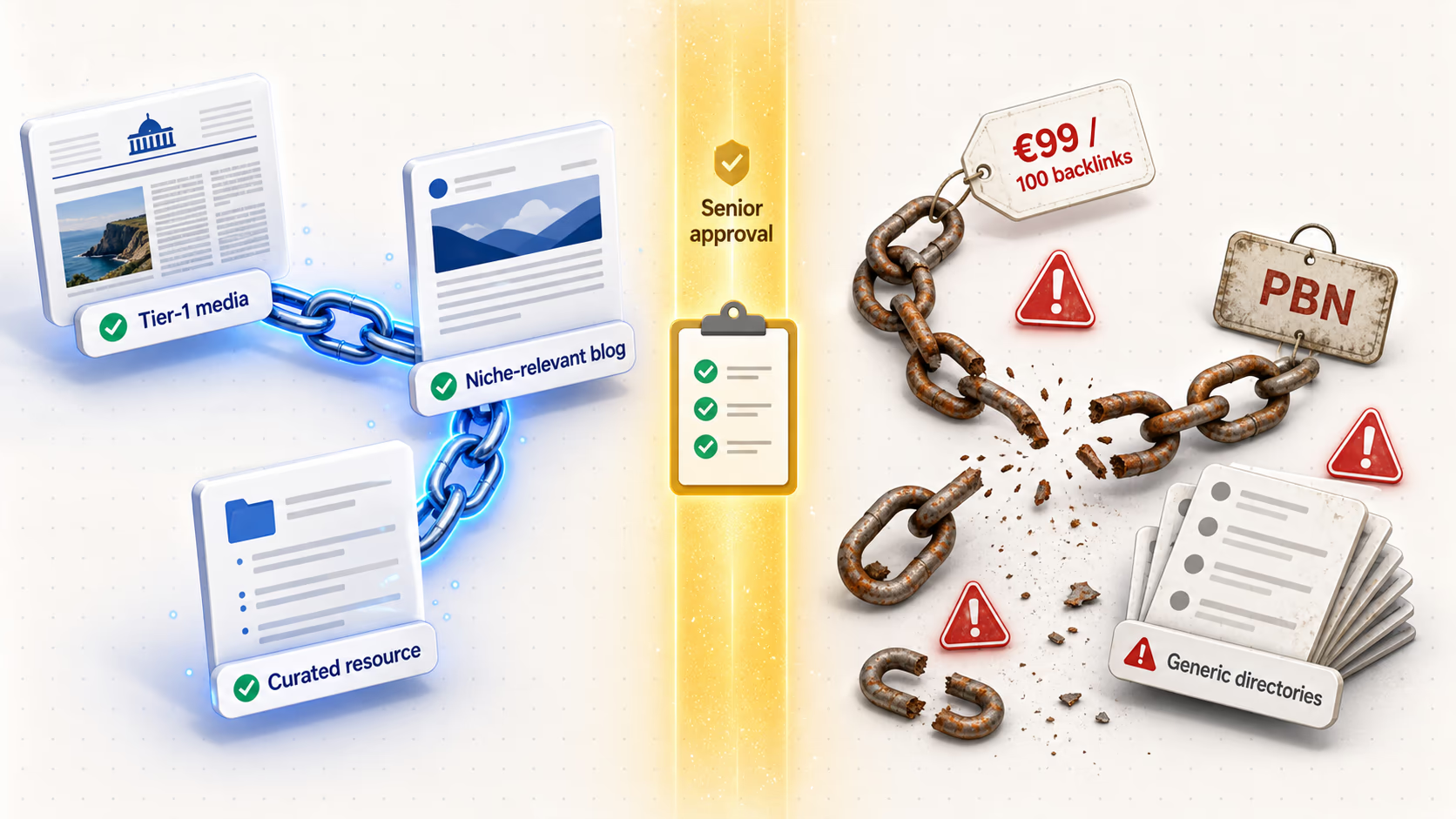
The fastest way to waste a year of link-building budget is one of these patterns. Avoid them.
- Buying "100 backlinks for €99" packages — directory spam or PBN insertions. Google flags, your rankings drop.
- Exact-match keyword anchor text — natural links use brand or generic anchors. Repeat exact-match anchors trigger Penguin-era spam filters.
- Mass-pitched guest posts with the same template — editors recognise these instantly. Your domain reputation gets blacklisted across editor networks.
- Building 100 links a month from cold start — link velocity that looks unnatural triggers manual review. Real campaigns build links at 5–15/month for most sites.
- Not auditing the existing backlink profile — building new links on top of toxic ones is wasted spend. Run a backlink audit + disavow first. free AI Search Snapshot includes one.
- Ignoring brand-entity signals — links from Wikipedia, Crunchbase, LinkedIn, and high-trust databases feed AI search citations. Worth more than any paid-for link.
- Pitching only the homepage — link to deep service pages or content assets, not just the home. Deep links pass topical relevance more strongly.
How much link building costs in Ireland
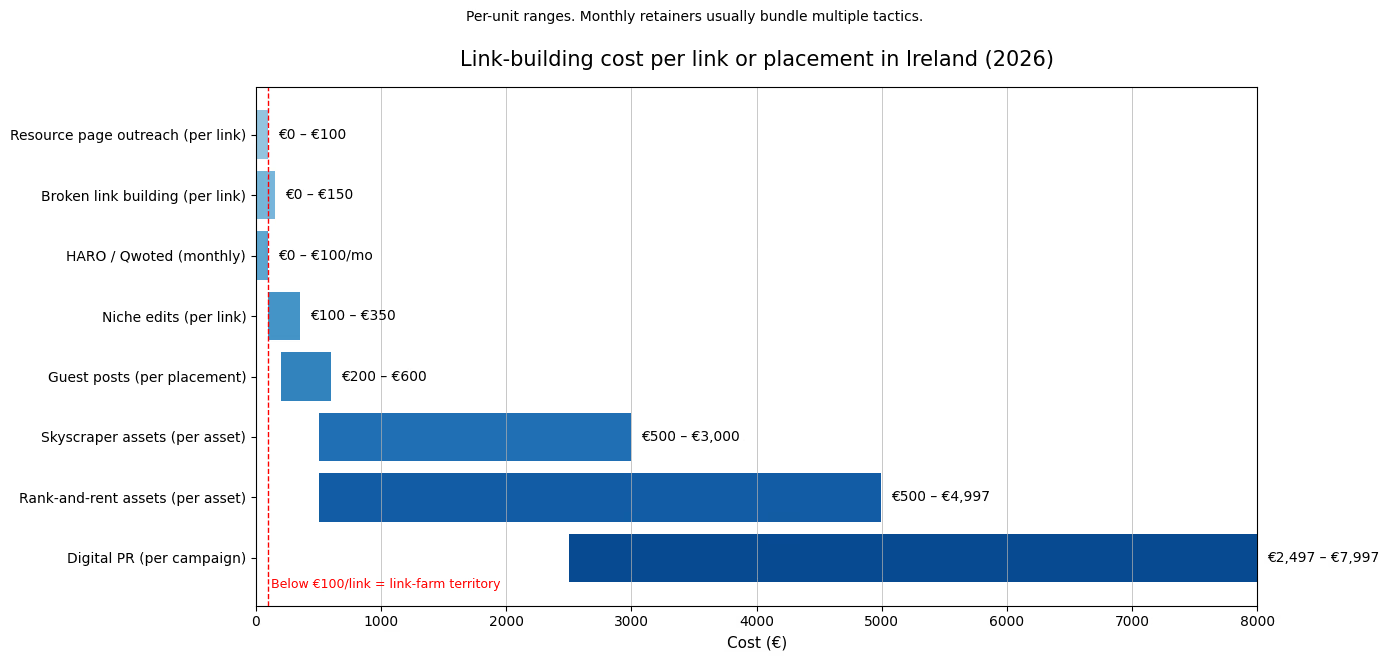
Honest 2026 ranges. To validate where you'd start, get a free AI Search Snapshot first — includes a backlink-profile assessment.
- Per niche edit: €100–€350 depending on host DR + traffic. Below €100 is almost always link-farm territory.
- Per guest post: €200–€600 incl. content writing. Quality writers + niche-relevant publications cost more.
- Per digital PR placement: €500–€2,497+ for tier-1 Irish media. Ad-hoc per-placement pricing is rare; usually retained campaigns.
- Monthly link-building retainer (small): €500–€1,497/month, typically 3–8 quality links/month with senior approval.
- Mid-market link-building retainer: €1,497–€3,497/month, 8–20 quality links + digital PR + niche edits at scale.
- Enterprise / multi-brand: €3,497–€9,997+/month for multi-property campaigns with digital PR + outreach + reputation management.
Below €500/month for link building you're getting either PBN/spam links or junior outreach with no senior judgement on prospects. Quality starts at €500/month with vetted prospects and approval workflow. See our honest comparison of Dublin link-building agencies for context on what each tier looks like.
Frequently asked questions
How long until link building moves rankings?
Niche edits on indexed pages move within 2–6 weeks of indexation. Guest post links take 4–8 weeks because the host page itself needs to gain authority. Digital PR placements move rankings within days for branded queries and 1–3 months for non-branded competitive terms.
Are guest posts still effective in 2026?
Yes — when they're genuinely topical, on niche-relevant publications, with editorial standards. Generic guest posts on link-farm sites are ineffective and risky. Quality threshold: would the publication accept the post if you weren't paying for the link? If yes, it's probably a real link.
What's the difference between niche edits and guest posts?
Niche edits insert your link into existing, indexed, ranking content — faster, cheaper, lower effort. Guest posts create new content with your link — slower, more expensive, more control over context. Most balanced campaigns use 60% niche edits + 40% guest posts.
What about toxic links and disavow?
Every link-building engagement should start with a backlink audit. Identify toxic links (low-quality directories, link farms, irrelevant foreign-language sites), disavow them via Google Search Console, then build clean. Adding new links on top of a polluted profile is wasted spend.
Can I do link building in-house?
Yes — if you have a dedicated outreach person with at least 4 hours/day. Link building is grindy work — prospect research, email sequences, follow-ups, relationship management. In-house works for ongoing volume programs. Agency works when you want senior-level prospect vetting without the headcount cost.
Should I avoid PBNs and rank-and-rent entirely?
Mostly yes. The economics rarely work — Google's spam filters get better every year, and one algorithm update can wipe out years of asset-building. The exception: legitimate property businesses (e.g. local lead-gen sites with real audiences) that happen to also link out. If the asset has standalone value, it's not a PBN.
How important are .ie domain links specifically?
Useful for Irish-relevance signal but not strictly required. Google understands geographic relevance from server location, language, and topical context. A high-quality link from a UK or US site about your niche typically beats a low-quality .ie link. Mix matters more than ccTLD purity.
What about brand mentions without links?
Google explicitly considers unlinked brand mentions as a separate signal — "implied links". Authoritative news mentions of your business name (even without a hyperlink) feed the brand-entity authority model. This is why press release strategy matters even when wires are nofollow.